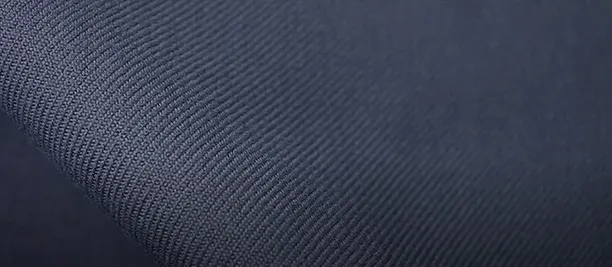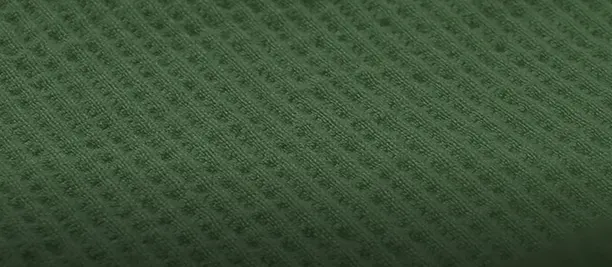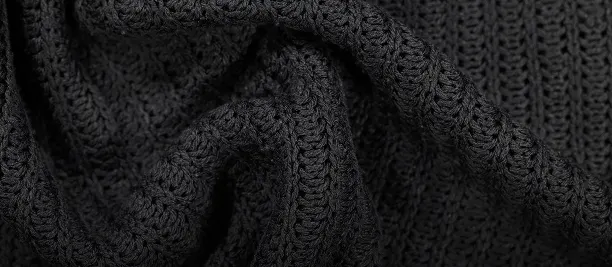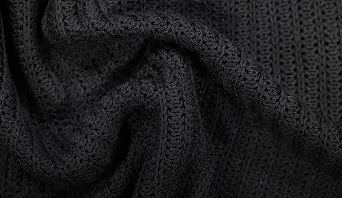
Cable knit  |
A knitting pattern in which cables produce a heavy cord. This stitch is most often found in sweaters |
| Calendered |
A cotton fabric that has undergone a special finishing process incorporating heat and pressure to appear more lustrous. |
| Camisole |
A woman's undergarment consisting of a bodice with thin straps. Dating back to the 1800's, this garment was originally worn under corsets, but now often substitutes for the bra for easy and relaxed foundational dressing. |
| Camp shirt |
A button-down shirt with a notched collar, boxy cut, straight hem and short sleeves that is often made in cotton for casual effect. |
| Canvas |
A heavy, durable plain-weave cotton fabric. Once used in tents, boat sails and other utilitarian products, this fabric became popular for sportswear, sneakers and bags after WWII and now reflects the ultimate in weekend style. |
| Cap sleeve |
A short sleeve popular on women's blouses and dresses that extends over only the edge of the shoulder to reflect the ultimate in feminine style. |
| Capri pant |
A slim-fitting women's pant that stops just above the ankle. Named after the Italian vacation island of Capri where the cut became popular in the 1950's, capris continue to offer resort style and relaxed elegance. |
| Car coat |
A three-quarter-length sport coat that was popularized by the suburban station wagon in the 1950's and has been a comfortable dressing option for driving ever since. |
| Cardigan |
A long-sleeved collarless sweater that buttons down the front. Originally designed by the seventh earl of Cardigan as an extra layer for warmth for his 1854 Crimean War military uniform, the cardigan is now a classic cover-up for both men and women. |
| Carding |
A process in which cotton is combed to remove extraneous fibers, trash and neps. Fibers are then oriented in a parallel manner and packaged to be processed further. |
| Chalk stripe |
Soft, thin white or gray, evenly spaced vertical lines woven into fabrics that give garments a classic elegance. |
| Chambray |
A lightweight cotton fabric, which combines a colored yarn with a white yarn. |
| Chamois |
A cotton fabric with a soft nap that is meant to imitate a type of sueded leather coming from the chamois goat. This warm, cozy fabric has become a favorite for the men's winter button-down, the chamois-shirt. |
| Chenille |
A fuzzy cotton yarn of fabric that has pile protruding around the weave. The French word for "caterpillar." |
| Chevron |
A pattern characterized by inverted V's, sometimes forming a zigzag. Chevron came to typify 1920's Art Nouveau design and adorned women's dresses and men's ties. Also referred to as herringbone. |
| Chino |
A durable cotton twill that is woven in several weights and can be finished with a smooth, mercerized or soft, brushed surface. Originally used for summer uniforms by the US Army during their defense of the Chinese in the 1900 Boxer Rebellion, chino gained popularity following WWII when college men wore them to college after returning from war. The name came to be after the twill was shipped to the army in freight boxes stamped with the country of origin; however, the imprint read "Chino" rather than "China." |
| Chintz |
Glazed cotton fabric, often printed. Used widely in upholstery fabric. |
| Colorfastness |
A fiber, yarn, or fabric property referring to its ability to maintain its color and not fade, run or crock. |
| Combed Cotton |
Cotton in which a combing process removes the short fibers and any debris that may be with the fiber when it was in the field. This results in a cleaner, more uniform and lustrous yarn. |
| Combing |
A yarn finishing process that follows carding, removing additional extraneous fibers for a stronger, smoother yarn. High-quality cottons are typically combed. |
| Convertible collar |
A type of collar with small lapels. Convertible collars are usually worn open, but can be closed at the neck to resemble a regular shirt collar. |
| Cording |
A soft cord folded into a narrow bias-cut piece of fabric that is stitched into a seam to provide decorative embellishment. Very similar to piping |
Corduroy  |
A cotton fabric with distinctive vertical rows of soft pile. These rows, referred to as cords or wales, can vary in width. Pinwale is the thinnest and wide wale is the thickest. From the French phrase corde du roi, or "king's cord," corduroy once uniformed Louis XIV's outdoor servants. Today, it is a popular sportswear fabric ideal for pants and sport coats. |
| Corset |
A women's bodice reinforced by bone, wood, metal or plastic stays that is worn as a foundation to shape the figure. |
| Cotton |
The soft, fluffy fibers gathered from the seed of the cotton plant, or the cloth made from these fibers. First used by the people of India 5,000 years ago, cotton is considered to be one of the world's oldest fabrics. There are several grades of cotton which can be used for fabrics ranging from denim to voile. |
| Cowboy shirt |
A shirt style, usually with a V-shaped upper yoke in the front and back, snap closures, one or two breast pockets and contrast trimming or fabric accents. Originally worn by cowboys, the cowboy shirt is now a popular sportswear choice reflecting a rugged style. |
| Cowl neck |
Typically worn in women's sweaters, a neckline in which fabric is attached and drapes in soft folds. |
| Cravat |
Any style of neckwear. The term used to describe the forerunner of the modern-day necktie, introduced to the French regency in the 1800's by visiting Croatian cavalrymen who tied decorative fabrics about their necks. |
| Crewneck |
A high, round collarless neckline with a rib finishing. Popularized by crew racers, this neckline is now popular in T-shirts and sweaters. |
| Crocking |
An undesirable fabric property in which the dye rubs off due to improper dyeing or finishing. |
| Cross-dyeing |
A dyeing process in which yarn or fabric constructed from two or more different fibers are dyed such that each fiber is dyed a different shade. Cross-dyeing is often relied upon to produce fabrics with an iridescent, striped or checkered effect. |
| Cuff |
Typically refers to the turned-up hem of a trouser or the separate sewn-on extension of the shirt sleeve. |
| Cummerbund |
A tall waistband often in black or red that a man wears with a tuxedo. |